Library image SCOPIX
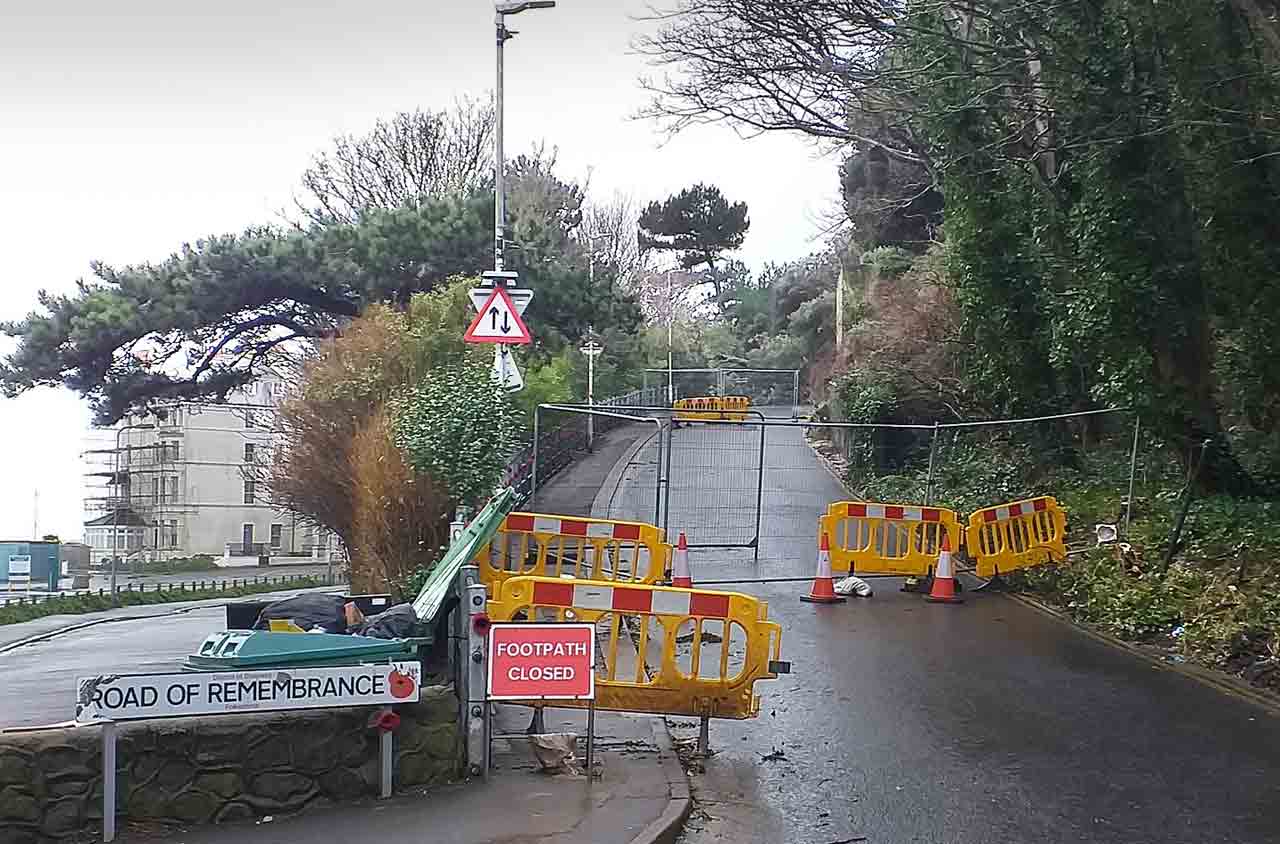
Kent County Council has announced a major commitment to reopen Folkestone’s Road of Remembrance, which has remained closed since a significant landslip buried the route under debris on 27 January 2024.
This vital link holds deep historical significance for the town, and its prolonged closure has impacted local businesses and residents alike. To address the instability of the cliff, KCC has earmarked funding within its draft 2026/27 budget for a £5 million engineering project.
The proposed stabilization plan is a technical feat designed to prevent future collapses. Engineers intend to drive 974 steel soil nails deep into the cliff face to anchor the unstable earth. This will be paired with erosion control matting, specialized mesh, and high-pressure shotcrete at the crest to protect nearby homes. A new drainage system will also be installed to manage groundwater pressure, which was a primary factor in the original 2024 failure.
Despite the complexities of the site—including the discovery of protected species and the need to preserve a historic war bunker—the project is gaining momentum. If the budget is ratified during the Full Council meeting on 12 February, specialized contractors could begin work as early as summer 2026. This restoration is viewed as a cornerstone for Folkestone’s ongoing economic regeneration and the return of a landmark that serves as a tribute to the town’s wartime heritage.
Military History
The Road of Remembrance is not merely a transport link; it is a sacred corridor of British military history. Originally known as Slope Road, it was renamed in the early 1920s to honour the nearly ten million servicemen who marched down its steep incline during the First World War. For these soldiers, many of whom had trained at the nearby Shorncliffe Camp, this road was their final walk on English soil before embarking from Folkestone Harbour for the Western Front. The descent was so sharp that officers famously gave the command to Step Short, ordering troops to shorten their strides to maintain control while carrying heavy packs—a moment now immortalized by the Step Short Memorial Arch at the top of the hill.
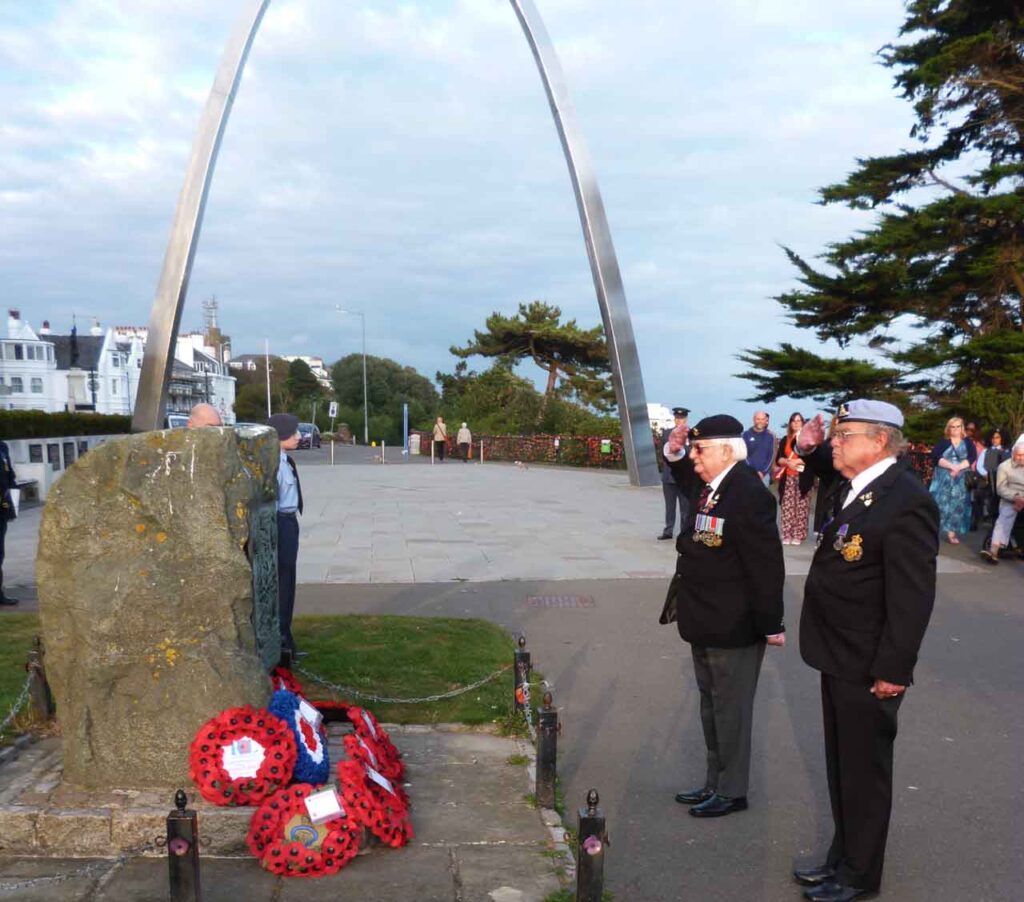
Memorial Arch – Photo: Ray Duff
Beyond its First World War legacy, the cliffside hides secrets from the 1940s. Buried deep within the earth is a Second World War naval bunker, which served as a critical communications relay station. During the conflict, personnel—including members of the Women’s Royal Naval Service (Wrens)—worked in vaulted rooms underground to intercept radio traffic and relay messages to Bletchley Park for decoding. This bunker, which the recent stabilization works seek to protect, also played a role in Operation Pluto, the ambitious engineering project to supply fuel to Allied forces in Europe via undersea pipelines.
Today, the road remains a living memorial. Its railings are traditionally adorned with thousands of hand-knitted poppies, and a memorial cairn stands at the summit, built from the very stones that once paved the route. The removal of debris following the 2024 landslip even revealed long-lost Victorian structures and a wartime sentry box, further cementing the road’s reputation as a site where Folkestone’s history is literally etched into the landscape. Reopening the route ensures that future generations can continue to walk the same path as the millions who departed for the “gateway to the trenches.”