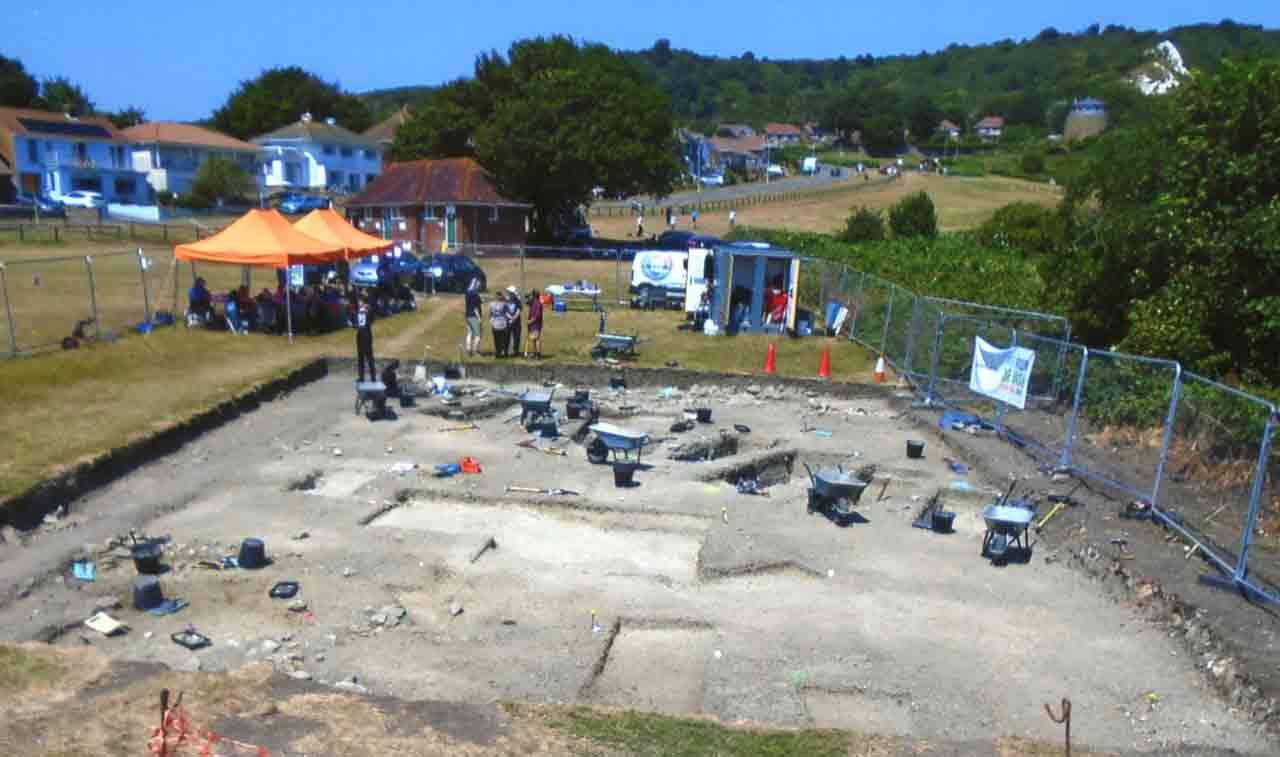
A view over the 2026 site on Jock’s Pitch
Words and Pictures by Ray Duff
A major archaeological breakthrough has occurred at Folkestone’s East Cliff, where excavators working on Jocks Pitch have uncovered the first new Roman building identified at the site in over a century. The discovery, made south of the toilet block, adds a significant new layer to the vast Iron Age settlement and its associated multi-stage Roman villa complex.
Initially, the chosen location appeared unpromising, as earlier geophysical surveys had revealed little beyond a Roman-era drain identified near the cliff edge in 2013. However, subsequent excavations yielded a wealth of historic structures and artefacts.
The Roman Building and Structural Finds
The newly discovered Roman building features substantial foundation walls embedded with numerous corroded iron nails, indicating that the original structure was at least partially timber-framed. Beneath the original flooring, excavators retrieved late Iron Age pottery alongside Roman-era material and small white tesserae cubes. Outside the walls, fragments of ceramic underfloor piping were recovered—the first of their kind found at East Cliff.
Because the remainder of the building has long since collapsed over the cliff edge, its exact purpose remains open to speculation, though it was most likely an outbuilding serving the main villa complex constructed around AD 200.
Enclosure Ditches and Earlier Human Activity
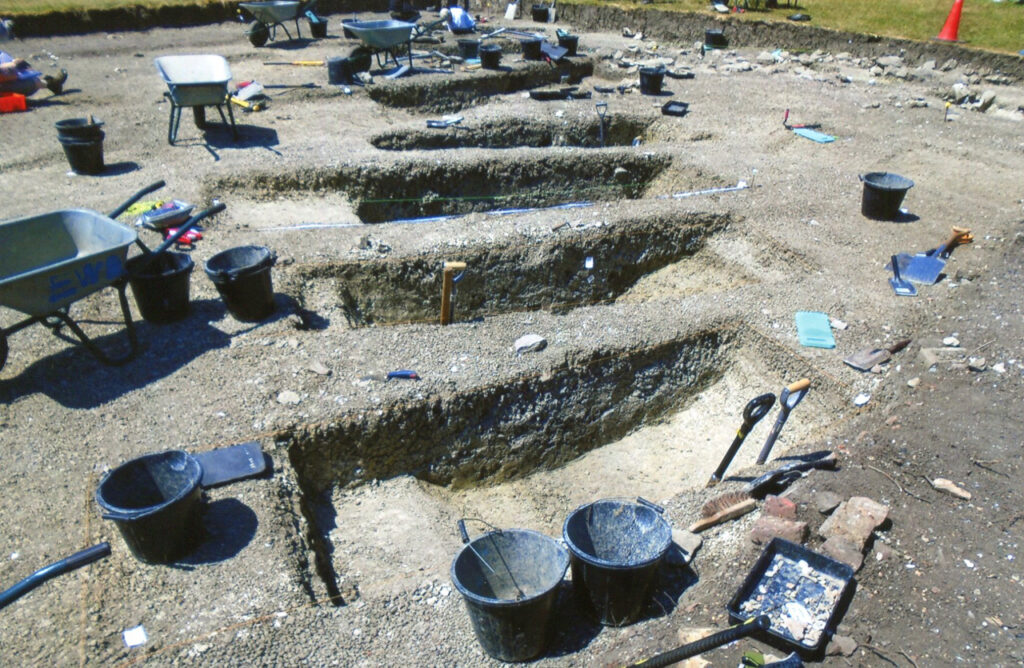
To the south of the wall, and running on the same alignment, lies a large enclosure ditch measuring approximately two metres across and up to a metre deep. Typically used to retain livestock, the ditch appears to have been originally dug in the late Iron Age before being backfilled in three distinct stages during the Roman period. A second enclosure ditch further south shares a similar likely date.
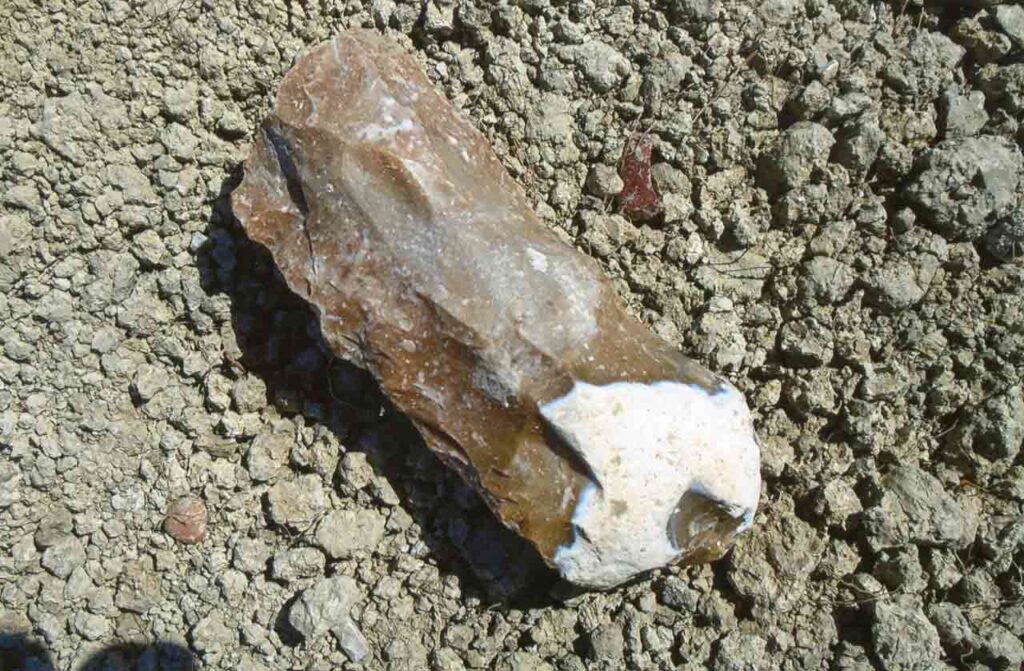
Between these features, shallow pits and surface activity yielded worked flint, animal bone, and pottery, pointing to an even earlier period of occupation—possibly early Iron Age or late Bronze Age. Among these early items was a notable Mesolithic handaxe, likely transported to the area through natural soil movement before its deposition.
Summary of Recovered Artefacts
The excavation produced a diverse range of historic materials, including:
- Ceramic roof tiles, floor tiles, and underfloor piping fragments
- Pot pottery spanning multiple eras and small white mosaic tesserae
- Animal bones, flint tools, and general stone rubble
- A displaced Mesolithic handaxe
These fresh discoveries underscore the urgent need for continued excavation at the ancient coastal site, where ongoing cliff erosion threatens to destroy irreplaceable national and international heritage.
Further info:
Canterbury Archaeology Trust: https://www.facebook.com/CanterburyArchaeologicalTrust/
East Wear Bay Project: https://eastwearbay.org/
Folkestone Research and Archaeology Group (FRAG) (More photos from this year’s dig!)
https://www.facebook.com/FolkestoneResearchAndArchaeologyGroup
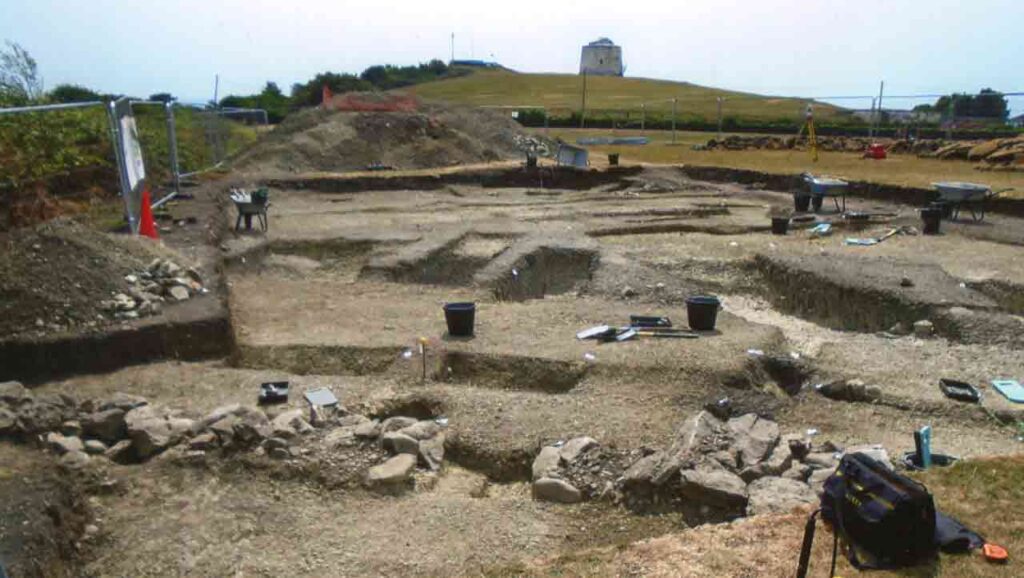
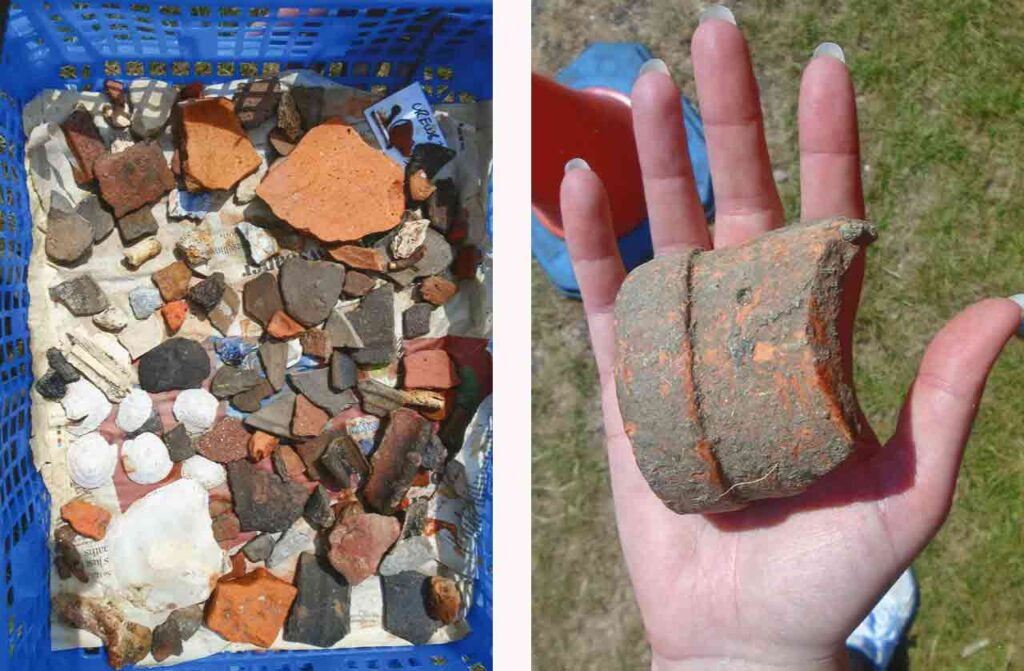
Top The ‘new’ Roman era building wall and sight of other finds across the area.
Left Just one small selection of many finds.
Right Roman ceramic pipe
Bottom Left The Mesolithic era handaxe.
Botom Right A view across the widest Enclosure ditch yet found.