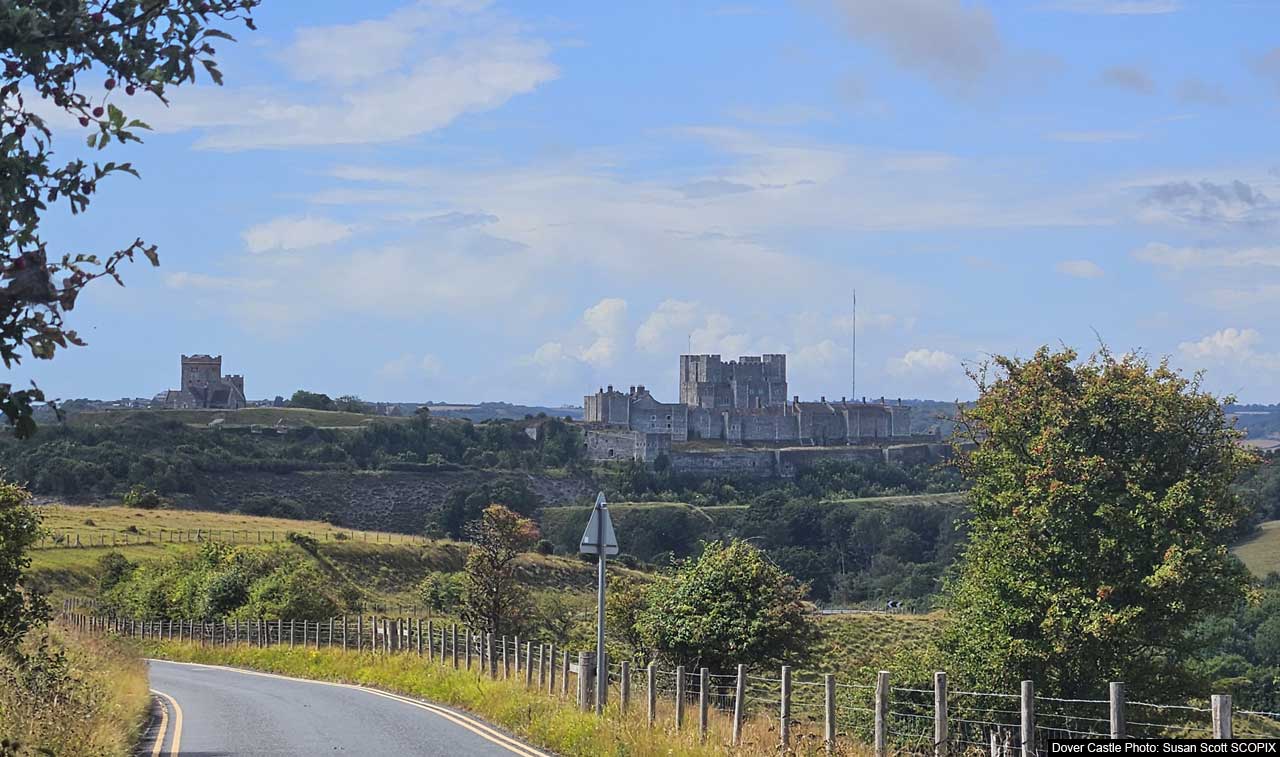
Library image SCOPIX
A Research Fellow at the University of Kent has reported a groundbreaking discovery revealing that masonry from Sandown Castle in Deal, a long-lost 16th-century fortress built by Henry VIII, was salvaged and reused to construct the 19th-century extension at Dover Castle’s Constable’s Gate.
Dr Christopher Moore, a Research Fellow at the University of Kent, reportedly combined archival records with architectural analysis in a study supported by the university and English Heritage. His investigation highlights how material from the Tudor stronghold survived coastal erosion and demolition to be repurposed within one of the country’s most iconic heritage sites.
Built between 1539 and 1540 as part of the ‘castles of the Downs’ defensive chain, Sandown Castle suffered severe damage from encroachment by the sea during the 19th century and was ultimately dismantled. Dr Moore uncovered an 1883 report confirming that stone salvaged from the crumbling fort was transported to Dover to construct officers’ quarters at Constable’s Gate between 1883 and 1884. His findings also trace Sandown’s recycled stonework to several other local landmarks, including Eastry Union Chapel, Walmer Castle, and the second pier abutment at Deal.
This research underscores the work of the Henrician Archaeological Research Foundation, a charity co-founded by Dr Moore and Dr Manolo Guerci to investigate and preserve early modern architecture lost to erosion and neglect.
Dr Guerci praised the initiative for combining academic rigor with accessible heritage preservation. Dr Moore described the physical connection to Henry VIII’s lost fortress at Dover Castle as a spine-chilling link across centuries, inviting the public to visit the site and experience this newly uncovered piece of history firsthand.